Syllabus
Schedule/Downloads
Syllabus for
Spring 2025 (Last update:
02/14/25)
 Course Title:
EECE442/NGCN301 Introduction to Communications and Network (3-0-3)
EECE442/NGCN301 통신 및 네트워크 개론 (3-0-3)
It is an elective course for the Electrical Engineering (EECE) major.
It is a mandatory course for the Next Generation Communications and Network
(NGCN) minor.
It is an open course for undergraduate students in military service.
Instructor:
Professor Joon Ho Cho
Office) LG 409 |
Phone) +82-54-279-2377 |
E-mail) jcho (at) postech (dot) ac (dot) kr
|
Office Hours: by appointment |
Graduate TA:
박지원, 이현석, 문진혁
|
Office)
LG OOO, OOO |
Phone) TBA |
E-mail)
jw0815
(at) postech (dot) ac (dot) kr |
Office Hours:
TBA |
Course
Objectives:
This course provides the foundations on the theory and practice
of communications and network for undergraduate EECE/CSED/NGCN students.
Textbook:
(available
online via POSTECH library)
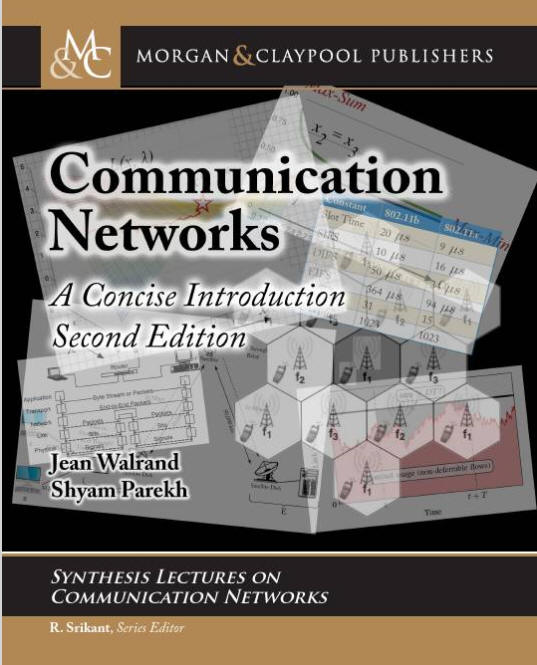
Course Outline
1. The Internet
2. Principles
3. Ethernet
4. Wi-Fi
5. Routing
6. Internetworking
7. Transport
8. Models
9. LTE, NR
10. QoS
11. PHY
12. Additional Topics
Prerequisites:
-
While there are no official prerequisites,
some basic knowledge of Electrical Engineering and Computer Science and
Engineering would be very beneficial for success in this course.
Companion
Undergraduate Courses:
EECE233 Signals and Systems
EECE302 Mathematics for EE Engineers A
EECE341 Introduction to Communication Systems
CSED352 Data Communication
CSED353 Computer Networks
EECE441 Introduction to Digital Communication
EECE443/NGCN302 Laboratory for Communications and Network
EECE451 Introduction to Digital Signal Processing
Additional Administrative Information on PLMS:
Policy on Academic Dishonesty
If the instructor suspects
academic dishonesty, the instructor will notify the student(s) and follow
the procedure to report to the school without any exception. Students have
the responsibility to be knowledgeable about the consequences of dishonesty.